Is deferred revenue a current liability?
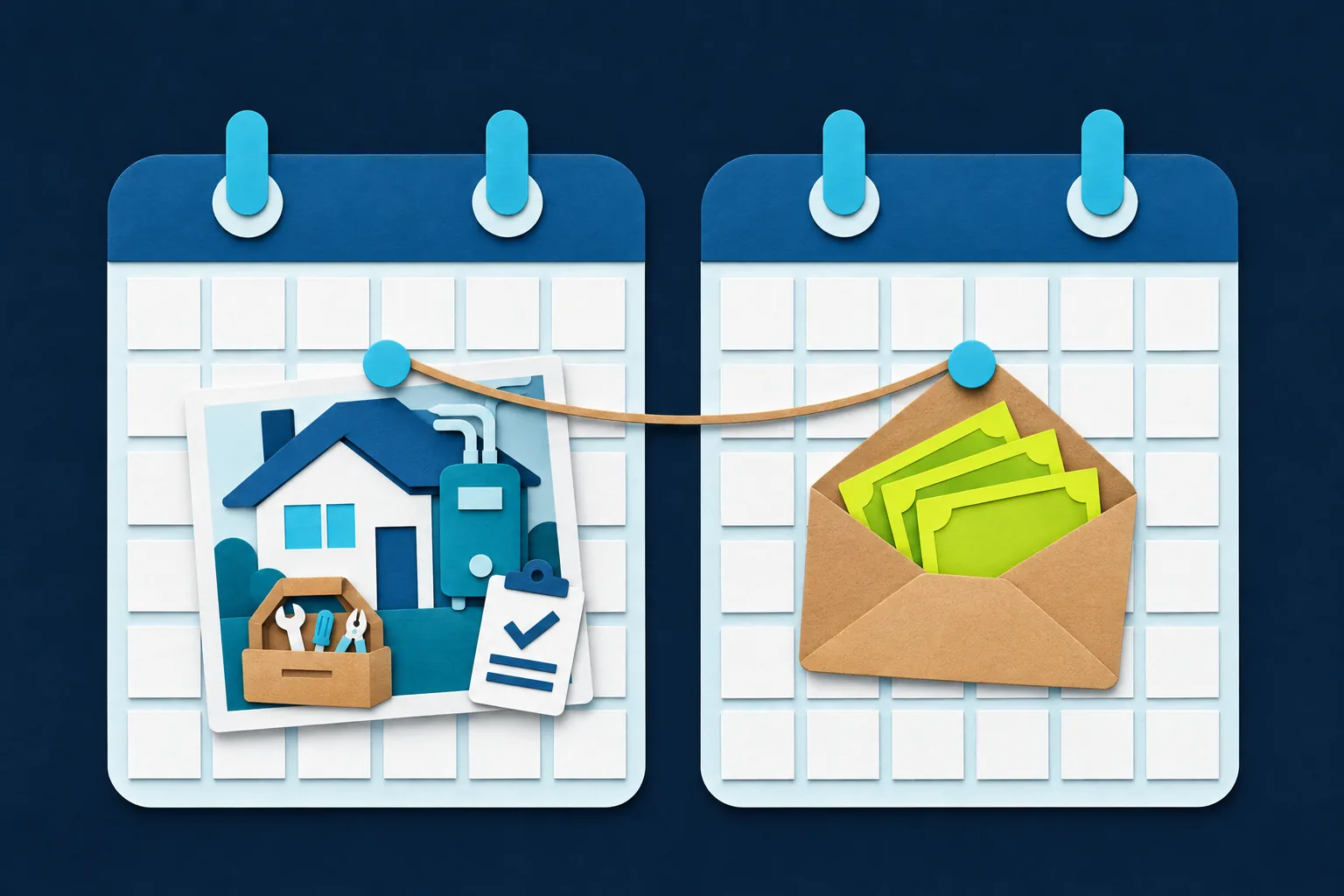
Yes, deferred revenue is a liability. It's money a customer paid you for work you haven't done yet: a deposit on a job, a prepaid season of lawn treatments, a maintenance agreement paid up front. Until your crew does the work, you owe it, either as the work or as a refund. So it sits on the balance sheet as a liability and moves to revenue as the work gets done.
Accountants also call it unearned revenue, customer deposits or a contract liability. In a home service business it shows up every time someone pays before the truck rolls. Below is an example lawn care company's prepaid season, booked both ways, and the QuickBooks setup. If you run route crews, here's how we set up landscaping bookkeeping.
Why is deferred revenue a liability?
A liability is anything the business owes. Most of yours are owed in money: the supply house, the truck note, payroll taxes. Deferred revenue is owed in work. The customer handed you cash, and you handed back a promise to show up.
Revenue is what you've earned, and you haven't earned a prepayment until the job is done. Book it as income the day it clears and your P&L counts work nobody has done yet. When the crews do that work months later, the costs land with nothing beside them.
A big deferred revenue balance is a good sign: customers trust you with their money. It also means part of your bank balance already belongs to work on the schedule.
What counts as deferred revenue in the trades?
Any money that arrives before the work does:
- Deposits on installs, repaints, roofs and remodels, until the job is complete. Our painting bookkeeping guide covers the deposit account for a paint crew.
- Prepaid seasons and annual plans for lawn care, pest control, pool service and window cleaning.
- Maintenance agreements and memberships paid for the year. HVAC bookkeeping walks through tune-up agreements visit by visit.
- Prepaid service packages and gift certificates.
- Seasonal work billed up front, like a holiday lighting install that includes the January takedown.
A payment on an invoice for finished work isn't deferred revenue. That job was already revenue, and the payment just clears the receivable.
Seasonal work makes the problem easy to see. We talked with an owner whose holiday lighting revenue came in up front while the takedown labor came months later, which made the P&L look deep in the red:
what some people that I know of do is they will journal entry that revenue to actually impact it, especially if you're doing it on an accrual basis. They can split that out to where maybe … 25% of that revenue gets allocated during the months of when you're actually going and doing it. It makes a really big difference on your profit loss actually looking more accurate to actually what's happening.
The 25% held back is deferred revenue. It waits on the balance sheet until the crews pull the lights down.
A lawn care prepay, booked both ways
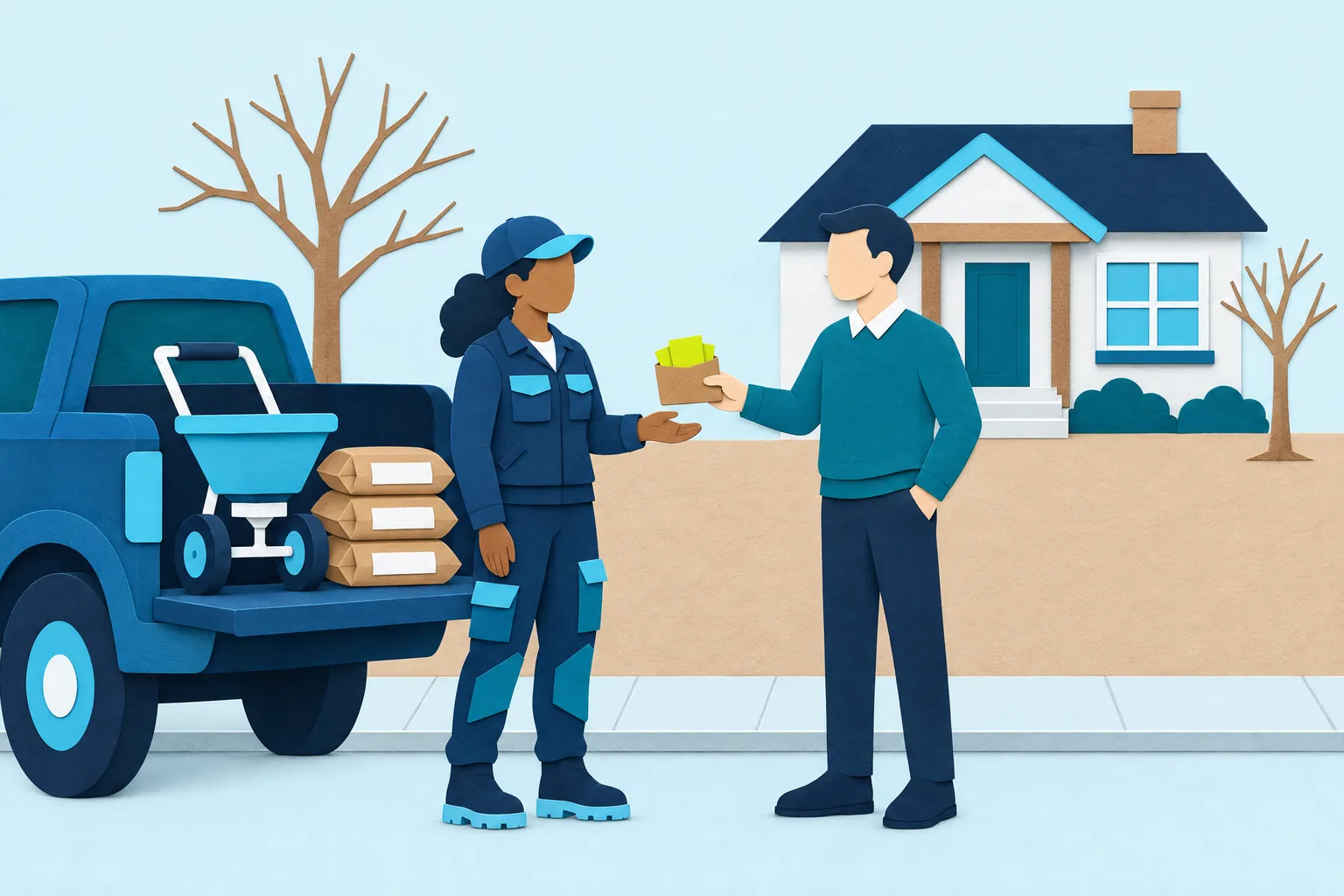
Here's an example lawn care company with round, made-up numbers. In February, 200 customers prepay an 8-round fertilizer and weed control program at $480 each, so $96,000 lands in the bank. The crews run one round a month from March through October, which earns $60 a lawn, or $12,000 a month.
| Month | Cash in | Revenue if booked when paid | Revenue if deferred | Still owed (deferred revenue) |
|---|---|---|---|---|
| February | $96,000 | $96,000 | $0 | $96,000 |
| March | $0 | $0 | $12,000 | $84,000 |
| June | $0 | $0 | $12,000 | $48,000 |
| October | $0 | $0 | $12,000 | $0 |
| Season total | $96,000 | $96,000 | $96,000 |
The season ends at the same $96,000 either way. What changes is which months show it. Booked when paid, February shows $96,000 of revenue for a few weeks of office work. Then say each round costs about $30 a lawn in product and labor: March carries $6,000 of cost and no revenue from these customers, a loss in a month the crews did everything right. Booked as deferred revenue, every month from March to October shows the $12,000 it earned next to the $6,000 it cost.
Read the deferred version like any profit and loss statement, and the margin on the program is right there: 50%.
How much of your cash is really yours?
Subtract deferred revenue from the bank balance before you decide what you can spend. Say the lawn company has $70,000 in the bank in June, and $48,000 of it is still owed to these customers as 4 more rounds. Roughly $24,000 of that will go out as product and labor to deliver them. Spend the June balance on a truck and those rounds may end up on the line of credit.
Prepaid sales are still a smart way to raise cash. Here's how we pitched them to a group of service owners early in the 2020 COVID slowdown, with an airline's discounted, refundable prepaid tickets as the model:
…So if, imagine being able to, send out a blast to your customers and say, Hey … if you buy pre-purchase services now, you get a 20% off discount on services that you can use … once this thing blows over, it could be a nice cashflow, crutch
The cash from a prepaid sale is real, and so is the work behind it. At 20% off, the margin on that work is thinner, too. Book the sale as deferred revenue, and your cash flow forecast should carry the labor and materials it will take to deliver.
How do you set it up in QuickBooks?
You need a liability account, an item that points to it and a monthly entry. Menu names differ a little between QuickBooks Online's older and newer layouts.
- Open the Chart of accounts and select New. Choose the account type Other Current Liabilities and name it "Customer deposits." Add a second one called "Prepaid plans" if you sell seasons or agreements.
- Open Products & services, select New, then Service. Name it "Customer deposit" and set its Income account to the Customer deposits liability. If you sell plans, make a "Prepaid plan" item the same way, pointing to Prepaid plans.
- When a deposit or plan payment comes in, select + Create (+ New in older menus), then Sales receipt. Pick the customer, the item and the amount. In Deposit to, choose the bank account the money actually went into, usually your operating account. If a state law or your contract makes you hold deposits in a separate account, pick that one.
- When the job's done, invoice the full price. On the last line, add the Customer deposit item with the deposit as a negative amount, so the invoice shows the balance due.
- For prepaid plans, make one journal entry a month after the rounds or visits are done: debit Prepaid plans and credit your plan revenue account for what was earned. Pull the count from your field software.
The chart of accounts for contractors shows where these accounts sit with the rest of your liabilities.
How is deferred revenue taxed?
Your books and your return can treat a prepayment differently. Publication 538 says you generally report an advance payment as income in the year you receive it. If you use an accrual method and the payment qualifies, you can elect to postpone the part you haven't earned to the next tax year, but no further.
December is when this matters. Lawn and pest companies that run early-bird renewals in December collect money for next season's work. Under the general rule, that money is income on this year's return, even though your books won't count it as revenue until spring. Changing how you report advance payments takes IRS approval on Form 3115. Talk to your tax preparer before you run a December promotion. Our tax services page covers how we handle the return.
Questions owners ask
Is deferred revenue a debit or a credit?
A credit, like any liability. When a $480 prepay arrives, cash goes up by a debit and deferred revenue goes up by a credit. As the crews do the rounds, you debit deferred revenue and credit revenue.
Is a customer deposit the same as deferred revenue?
Close enough to book the same way. A deposit is usually part of one job's price, and deferred revenue often covers a series of visits. Both are work you owe, and both sit in liabilities until it's done.
What happens if the customer cancels?
If you refund the money, the liability and the cash both go down, and no revenue was ever booked. If your contract lets you keep a nonrefundable deposit, move it to income when the customer cancels, because you no longer owe the work.
Spend only the cash your crews have earned
Run every deposit and prepaid plan through a liability account, and subtract that balance from the bank before you decide what you can spend. Then March shows what March earned, and the June balance doesn't go to a truck while 4 rounds are still owed. Bring your last balance sheet to a free profit call, and in 30 minutes we'll look at how much of your bank balance is already spoken for.