Accounts payable process for service businesses
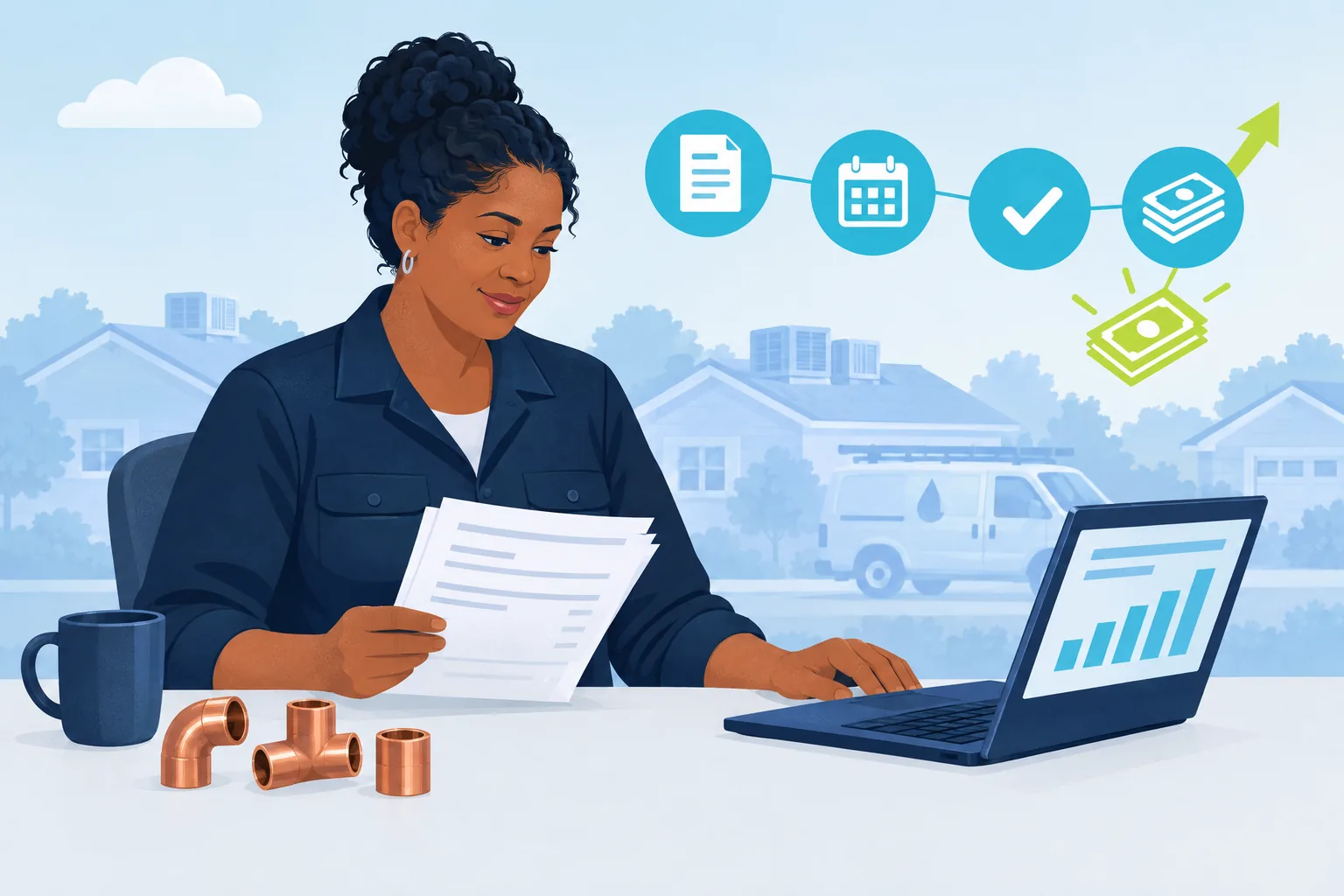
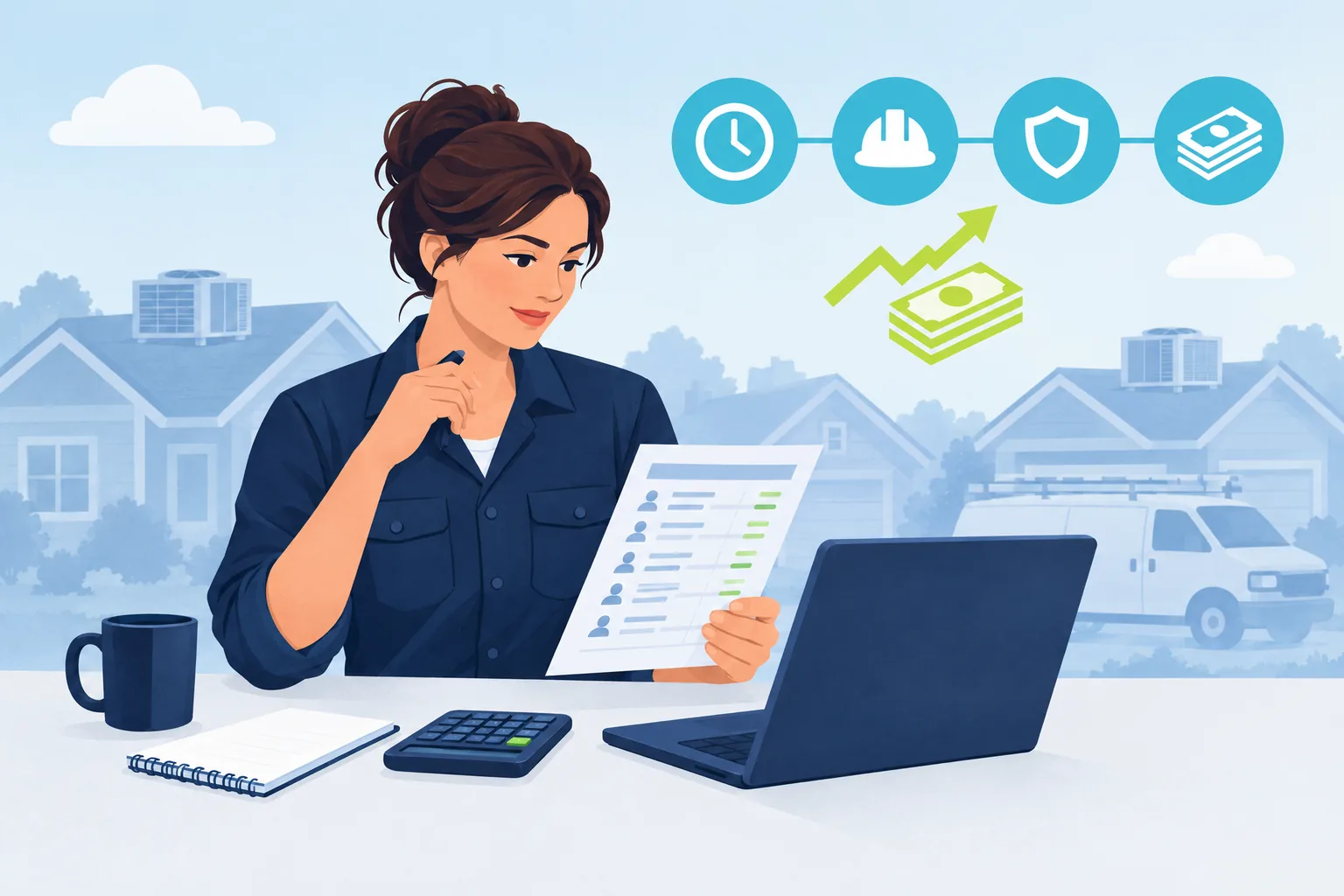
Accounts payable (AP) is what your business owes suppliers and subs and hasn't paid yet. A working accounts payable process for a service business has six steps: every bill goes to one place, someone checks it against the job, it's entered and coded to that job the day it arrives, the owner approves the big ones, it's paid on a set day, and once a month the list is matched to vendor statements and the bank.
The reason to bother is your bank balance. Until a bill is entered, the money looks like yours. An owner told Brandon Vaughn, who coaches home service owners, that he'd paid off his credit cards a year and a half earlier and was back in debt anyway: "I don't blow money. I don't know how it gets away from me." Brandon's answer:
Because you look at the bank account, you're like, sweet, I got 20 grand sitting there. … I can afford to buy this. When reality is, you'll look at your budget sheet and you'll say, … I gotta keep that. … That money is already accounted for. It's already spent.
He was talking about cash set aside for the slow season. Supplier bills you've received and haven't entered are the same trap: money in the account that's already spoken for.
The process, step by step
| Step | What happens | Who | When |
|---|---|---|---|
| 1. Receive | Bills go to one email inbox; paper bills get photographed | Office | The day they arrive |
| 2. Check | Match to the delivery ticket, the job or the sub's finished work | Office, with the lead tech | Before it's entered |
| 3. Enter and code | Vendor, due date, account and job | Office or bookkeeper | Same day |
| 4. Approve | Owner signs off on anything over a set amount | Owner | Weekly |
| 5. Pay | One or two pay days a week, on the due date | Office | For example, Tuesday and Friday |
| 6. Match | Unpaid bills list against vendor statements and the bank | Bookkeeper | Monthly |
Step 3 is the one that pays for itself. A part coded to the job it went on is what job profitability numbers are built from, and it puts materials and subs in cost of goods sold where they belong (the chart of accounts post shows the setup).
Who should own accounts payable?
Not the owner. In Brandon's own company, the office manager ran it:
But my office manager, she would enter in all of our receipts into QuickBooks, she had access to QuickBooks, … she would put in all the you know, accounts payables. And then she would actually go in and update my budget sheet once a month.
His deadline for her was the 7th of the following month. The owner's job is approving the big bills and reading the numbers, not typing them in.
Supply house accounts and terms
If a supply house gives you 30 days, use them. Keep the cash flow forecast next to the AP list so you know which week the big bills land.
Once a month, compare each supply house statement to your own list. Statements catch the bill that went to an old email address, the return credit nobody used and the charge you paid twice.
Once a year, look hard at the bills that renew on their own, like insurance, software and accounting. Brandon asked one owner whose insurance and accounting bills kept growing while he stayed with the same vendors:
Why is it that the longer you're with someone, the more they take advantage of it?
Get a second quote on anything that's grown faster than your revenue.
Paying subs and filing 1099s
Get a Form W-9 from every sub before you pay them the first time, while they still want the check. For payments made in 2026, you generally file a Form 1099-NEC for each sub who isn't your employee and who you paid $2,000 or more for services during the year. Payments to most corporations, including LLCs taxed as one, are exempt. The form is due to the IRS and the sub by February 1, 2027, and a W-9 on file in March beats chasing one in January. If you're not sure a sub is really a sub, read employee versus subcontractor first.
Common questions
Is accounts payable on the profit and loss statement?
No. AP is a liability on your balance sheet. On accrual books, the expense hits your P&L when you enter the bill; on cash books, it hits when you pay it.
Should I pay supplier bills as soon as they come in?
Usually not. Pay on the due date so the cash stays with you longer, unless the vendor offers an early-payment discount worth more than holding the cash. What matters is paying on time every time, so the supply house still extends credit in a slow month.
If your bills live in an inbox, a glovebox and a stack on the desk, bring them to a free profit call and we'll show you what you owe this month. YetiBooks keeps the books for plumbing companies and every other trade, and here's how it works.